Thinking about finishing your basement but not sure if it will actually pay off when you sell in Gahanna? You’re not alone. Many local homeowners weigh the extra living space against cost, permits, and resale value. In this guide, you’ll learn how finished basements affect marketability and price in Gahanna, what scope of work makes sense, and how to run a simple, numbers-first decision. Let’s dive in.
What a finished basement means for value in Gahanna
A finished basement can increase your home’s appeal by adding usable space for recreation, a home office, or a guest area. In family-oriented suburbs like Gahanna, that can widen your buyer pool and sometimes shorten time on market. The catch is how appraisers and buyers value below-grade space compared to above-grade living area.
Most appraisals in Franklin County treat finished basements as below-grade space that often carries a lower value per square foot than the main floors. Buyers still respond to the function and finish quality, but you should not assume every finished square foot returns the same price as above-grade living area. The most reliable way to estimate your payoff is to compare recent neighborhood sales with finished vs. unfinished basements.
How buyers view finished basements
- Many buyers appreciate extra indoor space for playrooms, movie nights, home gyms, or offices.
- Some buyers look for the option to add a bedroom, which requires proper egress to meet code.
- A few buyers prefer unfinished basements for storage or to avoid potential maintenance and higher taxes.
Appraisal and MLS treatment of below-grade space
- Below-grade finished space is often listed and valued separately from above-grade living area.
- Quality, condition, ceiling height, and access to natural light influence how buyers perceive value.
- Local comps in your neighborhood and school district boundaries are key to estimating a realistic premium.
Cost and scope basics
Your return depends on what you build. Define the scope before you price the project.
- Basic rec room or family room: framing, insulation, drywall, flooring, lighting, and HVAC distribution. Often the most cost-efficient path to a solid buyer response.
- Add-on bathroom: plumbing, fixtures, waterproofing, and sometimes sewage line work. Raises complexity and cost.
- Full suite or apartment: kitchenette, bathroom, possible separate HVAC, and dedicated egress. Highest cost and stricter zoning or occupancy considerations.
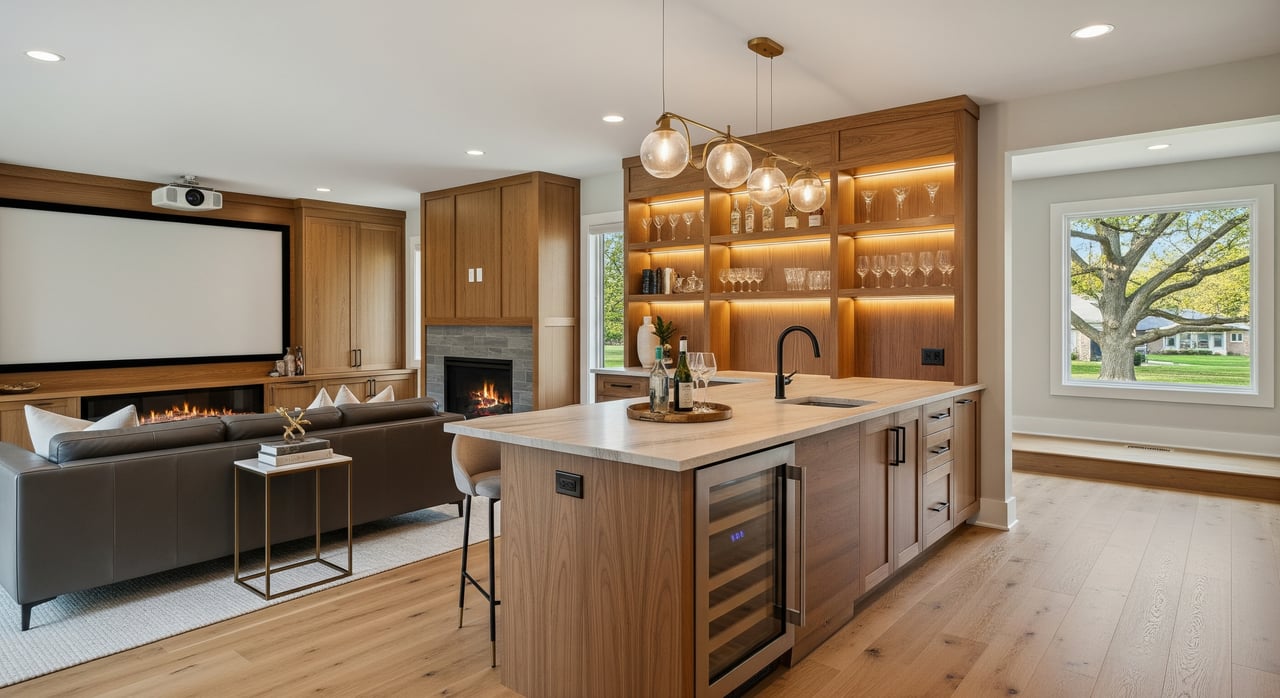
- Luxury features: wet bar, theater wiring and acoustics, high-end flooring and trim. These can attract attention but should be compared to local comps to avoid overbuilding.
Common cost drivers in Gahanna homes
- Moisture mitigation: waterproofing, sump pumps, French drains, and exterior grading.
- Egress requirements: adding or enlarging windows or doors for any bedroom.
- Mechanical and electrical upgrades: panel capacity, lighting, outlets, HVAC balancing, and dehumidification.
- Plumbing: extending supply and drain lines for bathrooms or kitchenettes.
- Ceiling height and layout: bulkheads and soffits to conceal ductwork or beams.
- Hazard remediation: addressing mold, asbestos, or lead if present.
Tip: Get at least three written bids with itemized line items and timelines. Include permit and inspection costs.
Permits, safety, and local risks
Finishing a basement in Gahanna typically requires permits for building, electrical, plumbing, and mechanical work. Inspections confirm the work meets code. If you plan a bedroom, you will need compliant egress windows or doors with proper sizing and sill height.
Gahanna has homes near streams in the Big Walnut Creek watershed. If a property sits in a flood-prone area, additional waterproofing or insurance may be required, and finishing may not be advisable. In Ohio, radon is also a known risk. Testing before you finish and planning for mitigation protects your health and your investment. Proper insulation, vapor barriers, and ventilation are essential to prevent moisture issues and mold.
If your plan resembles a separate dwelling, check zoning and occupancy rules before you invest. You may also need to update your insurance coverage for the finished area or any rental use.
Should you finish before selling?
Sometimes yes, but only if the numbers and timing work. Use this simple approach.
- Define the scope
- Decide whether you are creating a basic rec room, adding a bathroom, or building a full suite. Be specific about finishes.
- Price the work
- Gather three or more local bids. Confirm the permit schedule, inspection milestones, and lead times for materials.
- Pull local comps
- Compare recent sold homes in your neighborhood with similar above-grade size and features, some with finished basements and some without. Look at sale prices and days on market.
- Estimate net benefit
- Start with the likely price premium from the comps. Subtract project cost, any increase in assessed value and taxes, and carrying costs. If you plan to list soon, consider how the higher sale price affects closing costs.
- Consider lighter alternatives
- If timing is tight, fresh paint, brighter lighting, carpet or LVP flooring, or a well-staged open rec area can improve appeal without a full build-out.
- Check your timeline
- Permits and contractors can take weeks to months. If you need to hit a specific listing window, a full finish may not fit the schedule.
Buying a Gahanna home with a basement
If you are purchasing, focus on condition and safety first. A finished basement has value only if it performs well over time.
- Inspect thoroughly
- Ask your inspector to evaluate foundation walls, moisture history, sump systems, and ventilation. Order a radon test.
- Fix risks before finishes
- Prioritize waterproofing, grading, radon mitigation, and HVAC balancing before you add or upgrade finishes.
- Decide how you will use the space
- Recreation room, home office, bedroom with egress, or a potential income suite. Each use has different code and cost implications.
- Plan financing
- Options can include savings, home equity, a cash-out refinance, or a renovation loan such as an FHA 203(k), depending on your situation.
- Think long-term value
- Consider how much you will actually use the space, the resale premium your neighborhood supports, and the maintenance cost to keep the area dry and healthy.
Quick checklists
Seller pre-decision checklist
- Pull 12–24 months of local sold comps with and without finished basements.
- Get 3+ contractor bids with itemized line items, timeline, and permit costs.
- Ask your agent to run a net-proceeds analysis, including potential tax impact.
- Confirm project timeline against your desired list date.
- Verify zoning or rental rules if adding a separate suite.
Buyer inspection checklist for a finished basement
- Check for moisture stains, efflorescence, or past water damage.
- Verify sump pump condition and consider backup power.
- Review radon test results and look for a mitigation system.
- Inspect for signs of mold or poor ventilation.
- Confirm egress window or door compliance for any bedrooms.
- Assess HVAC distribution, insulation, and electrical capacity.
When finishing tends to pay off
- Your neighborhood comps show a consistent premium for finished basements of similar quality.
- You can complete a code-compliant rec room or bedroom with egress on a reasonable budget and timeline.
- Moisture control, radon mitigation, and ventilation are addressed up front.
- You plan to use the space for years, enjoying lifestyle benefits while you hold the home.
When to think twice
- The home sits in a flood-prone area or has unresolved water intrusion.
- Contractor lead times and permits would make you miss your ideal selling window.
- The project scope creeps toward a full suite without comp support for the added cost.
- The expected premium, after costs and taxes, is thin or uncertain.
Bottom line for Gahanna homeowners
A finished basement can absolutely help your Gahanna home stand out. The key is matching scope and quality to what buyers in your neighborhood will pay for, and protecting the space with proper mitigation and permits. If you focus on comps, code, and moisture control, you can make a confident, financially sound decision that supports both daily life and resale.
If you want a comps-driven estimate of the premium your home could command with or without a finished basement, reach out for a local analysis, timelines, and next-step options. Connect with Jason Peeler for a neighborly, numbers-first conversation.
FAQs
Will finishing my basement increase my Gahanna home’s sale price?
- Sometimes. It depends on the quality of the finish, neighborhood comps, and how buyers value below-grade space compared to above-grade living area.
How much does it cost to finish a basement in Gahanna?
- Costs vary widely by scope and condition; get three local bids that include permits, inspections, moisture control, and any plumbing or egress work.
Do finished basements count toward square footage in Franklin County?
- Appraisals often treat below-grade finished space separately and value it at a lower rate per square foot than above-grade living area.
Do I need permits to finish a basement in the City of Gahanna?
- Yes. Building, electrical, plumbing, and mechanical work typically require permits and inspections; bedrooms need code-compliant egress.
What are the biggest risks of finishing a basement in Gahanna?
- Moisture and flooding, radon, inadequate egress, poor ventilation that can lead to mold, and unexpected structural or utility upgrades.
Should I finish my basement before listing or sell as-is in Gahanna?
- Compare local comps and project bids; if the expected premium is modest or timing is tight, lighter updates or selling as-is may be smarter.